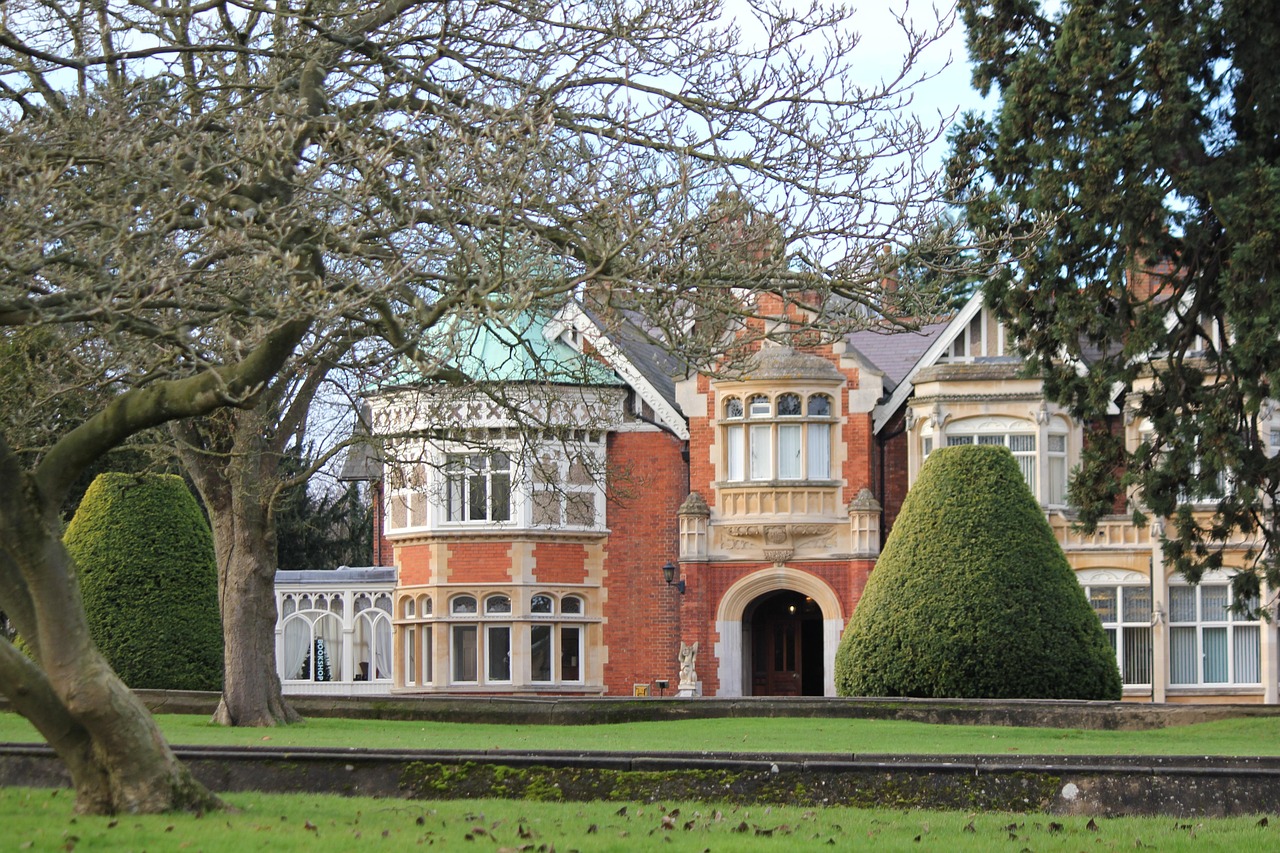
In the annals of military history, few tales of intellectual prowess rival the clandestine efforts undertaken at Bletchley Park during World War II. While the story of cracking the Enigma machine is widely known, another, even more complex challenge loomed: the Lorenz cipher. Employed by Hitler and his High Command for their most vital strategic communications, the Lorenz machine, dubbed 'Tunny' by the British, represented the apex of Axis cryptographic technology. Its defeat would require not only extraordinary human intellect but also the birth of a revolutionary machine: the Colossus computer.
The Second World War was not merely a conflict of steel and blood; it was also a clandestine battle of minds, fought in the shadows of cryptography and intelligence. Among the most formidable challenges faced by the Allied codebreakers at Bletchley Park was the German Lorenz cipher, known to the British as 'Tunny'. This highly sophisticated teleprinter cipher system, used for high-level strategic communications by the German High Command, presented a far greater hurdle than the infamous Enigma machine. Its eventual decryption, facilitated by the pioneering Colossus computer, stands as one of the most remarkable intellectual and technological achievements of the war, profoundly impacting its outcome and laying foundational stones for the digital age.
Overview: The Enigma of 'Tunny'
The Lorenz SZ40/42 cipher machine was a complex electro-mechanical device designed to encrypt teleprinter messages, primarily those between Adolf Hitler and his generals. Unlike the Enigma, which was essentially a field cipher, Lorenz was a strategic cipher used for fixed-point-to-point communications, making it exceptionally sensitive. It employed a stream cipher methodology, combining a plaintext character (represented by a 5-bit Baudot code) with a pseudorandom keystream generated by a series of twelve wheels. These wheels, grouped into 'chi', 'psi', and 'mu' sets, moved in complex patterns, creating an astronomical number of possible key combinations.
Bletchley Park’s 'Newmanry' section was tasked with tackling Lorenz. The journey from intercepting gibberish to reading high-grade German intelligence involved an incredible blend of mathematical genius, engineering prowess, and relentless dedication. The ultimate triumph was not just a victory in cryptanalysis but also the birth of the world’s first large-scale electronic digital programmable computer, Colossus, a machine that redefined what was computationally possible and provided invaluable 'Ultra' intelligence throughout the latter half of the war.
Principles & Laws: The Cryptographic Landscape
The Nature of Stream Ciphers and Pseudorandomness
The Lorenz cipher operates on the principles of a stream cipher. In essence, it generates a long, pseudorandom keystream which is then XORed (exclusive OR) with the plaintext to produce the ciphertext. Decryption reverses this process. The security of such a system hinges on the unpredictability and statistical randomness of the keystream. If the keystream were truly random and never reused, it would constitute a Vernam cipher or One-Time Pad, offering perfect secrecy. However, mechanical devices like Lorenz generate a pseudorandom stream based on a finite key space (the wheel settings), making it susceptible to attack if patterns or repetitions can be detected.
Boolean Logic and Statistical Exploitation
At its core, the operation of Lorenz, like all digital computation, relies on Boolean logic. The XOR operation is fundamental to both encryption and decryption. Cryptanalysis of Lorenz heavily exploited statistical weaknesses arising from the finite length and non-randomness of the keystream, particularly when keys were reused (a fatal flaw in practice, though not inherent to the design). Linguistically, the German language, like any natural language, exhibits predictable statistical properties: certain letters, digraphs (pairs of letters), and trigraphs (triples of letters) occur with known frequencies. By applying transformations to the ciphertext and analyzing the resulting statistical distributions, cryptanalysts could infer properties of the keystream and, ultimately, the wheel settings.
Teleprinter Codes and Synchronization
Lorenz used a 5-bit Baudot code for its characters, allowing for 32 unique symbols. Communications were synchronous, meaning the sending and receiving machines needed to be precisely aligned in their keystream generation. This synchronization was critical for encryption and, ironically, also provided potential vulnerabilities for cryptanalysis if disruptions or repetitions occurred.
Methods & Experiments: From Pencil & Paper to Electronic Giants
Bill Tutte's Breakthrough: Deducing the Lorenz Structure
The initial challenge was monumental: Bletchley Park had never seen a Lorenz machine. Its internal workings were entirely unknown. The first major break came in August 1941, not from capturing a machine, but from a catastrophic operational error by a German sender. Two very similar messages were sent with almost identical key settings, differing only slightly in their starting point and length. This allowed cryptanalyst John Tiltman to produce two ciphertexts (C1 and C2) which, when XORed together (C1 ⊕ C2), cancelled out the keystream and yielded the XOR of the two plaintexts (P1 ⊕ P2). Because the plaintexts were similar, P1 ⊕ P2 contained a significant number of nulls, making it highly amenable to further statistical analysis.
From this critical insight, the brilliant mathematician Bill Tutte, working in the Research Section, applied an ingenious method. He realized that by XORing a character with the character two positions before it (the 'delta' or Δ operation), he could significantly simplify the problem. This Δ-transformation applied to the ciphertext of Lorenz (C = P ⊕ K) effectively removed the contributions of the fast-moving 'chi' wheels from the resulting stream. Tutte meticulously worked through the resulting sequences, discovering repeating patterns that revealed the periods of the 'psi' wheels (ψ). Through this extraordinary feat of pure mathematics, Tutte was able to deduce the logical structure of the Lorenz machine, including the number of wheels, their relative movements, and their periodicities, without ever seeing the machine itself. This deduction was a monumental intellectual leap, often cited as one of the greatest analytical triumphs of the war.
The Mechanization Imperative: From 'Heath Robinson' to Colossus
Tutte's method, while brilliant, was excruciatingly slow to apply manually. The sheer volume of intercepted traffic necessitated mechanization. The first attempt was the 'Heath Robinson' machine, an electro-mechanical device that used two synchronized paper tapes – one for the ciphertext and one for a hypothesized keystream component – to find correlations. While a step forward, its mechanical nature made it prone to breakage and slow.
The limitations of Heath Robinson led Max Newman, head of the Newmanry, to commission Tommy Flowers, an accomplished engineer from the Post Office Research Station at Dollis Hill. Flowers proposed an audacious solution: an entirely electronic machine, utilizing thousands of vacuum tubes, to replace the unreliable mechanical parts. Despite skepticism regarding the reliability of so many tubes, Flowers was confident, having extensive experience with them in telephone exchanges. His design concept was revolutionary.

Colossus: The Electronic Codebreaker
The Colossus computer, first operational in December 1943 (Colossus Mark 1), was a dedicated cryptanalytic machine. It read ciphertext from a continuous loop of punched paper tape at an astonishing 5,000 characters per second. Electrically, it implemented the logic derived from Tutte’s analysis. Colossus could perform Boolean operations (XOR, AND, OR, NOT) on the incoming stream and hypothesized keystream components, count the occurrences of specified patterns, and present the results to operators. Its primary function was to discover the initial settings of the Lorenz wheels for a given message by testing numerous possible combinations and identifying those that yielded statistically significant results. This process, known as 'wheel breaking,' was essentially a large-scale statistical search for correlations.
Colossus was programmable in a limited sense: its operations could be configured by switches and plugboards to perform different statistical tests (such as the Δ-method with various offsets and combinations). The sheer speed and reliability of Colossus transformed the intelligence gathering process from weeks or months into hours. Later versions, like the Colossus Mark 2 (first operational in June 1944), featured a completely electronic shift register for the pseudorandom patterns, making them even faster and more flexible. The Mark 2 also introduced features that allowed for more complex conditional probability calculations, enhancing its ability to home in on the correct key settings using techniques reminiscent of Bayesian inference.
Data & Results: The Statistical Validation
The core of Colossus's success lay in its ability to quickly perform statistical tests. For instance, after applying the Δ-operation and guessing a few of the wheel settings (e.g., Δχ1 ⊕ Δχ2), Colossus would count how many times the resulting stream exhibited a specific characteristic – often a simple count of zeros or ones. The 'chi-squared' test, or variations thereof, would then be used implicitly or explicitly by the human operators to determine if the observed counts deviated significantly from random expectation, indicating a potential correct key setting. The machine's speed allowed it to test millions of hypotheses in a fraction of the time it would take a human, reducing the search space dramatically.
Once the settings for the 'chi' wheels were determined, Colossus would then proceed to break the 'psi' wheels, and finally, the 'mu' wheels. This hierarchical approach, starting with the most frequently moving components, streamlined the complex task. The output of Colossus was a list of potential wheel settings, which were then fed into mechanical replicas of the Lorenz machine (also built at Bletchley Park and known as 'Tunny' machines) to decrypt the actual messages. The decrypted intelligence, codenamed 'Ultra,' provided invaluable insights into German military plans, troop movements, and strategic intentions, playing a crucial role in Allied operations, including D-Day.
Applications & Innovations: The Dawn of Digital Computing
Colossus was a groundbreaking machine, representing a monumental leap in computing history. It was the world's first large-scale electronic digital programmable computer. Its innovations included:
- Extensive Use of Vacuum Tubes: Colossus Mark 2 used approximately 2,400 vacuum tubes, pushing the boundaries of electronic reliability at the time.
- High-Speed Input/Output: The photoelectric paper tape reader could process data at unprecedented speeds, critical for cryptanalysis.
- Boolean Logic Gates: Its electronic circuitry implemented complex logical functions crucial for pattern recognition and counting.
- Modular Design: The architecture allowed for flexibility and expansion.
While not a general-purpose computer in the modern sense (it was largely hardwired for its specific cryptanalytic task and programmed via plugboards and switches), Colossus embodied many principles that would define post-war computing: electronic operation, digital representation of data, stored program concepts (albeit limited), and the ability to perform complex logical and arithmetic operations at speed. Its design influenced later pioneers like Max Newman, who went on to help establish the Royal Society Computing Machine Laboratory at the University of Manchester, where the Manchester Mark 1, another early stored-program computer, was developed.
Key Figures: Minds Behind the Triumph
- Bill Tutte: The brilliant mathematician whose deduction of the logical structure of the Lorenz machine from intercepted ciphertexts, without ever seeing the machine, remains one of the greatest feats of cryptanalysis.
- Tommy Flowers: The genius engineer from the Post Office Research Station who designed and built Colossus, proving that large-scale electronic computing was not only possible but reliable. His vision directly brought electronic computing into existence.
- Max Newman: A Cambridge mathematician who headed the 'Newmanry' section at Bletchley Park. He championed the mechanization of Lorenz cryptanalysis, overseeing the development of both the 'Heath Robinson' and Colossus machines.
- Alan Turing: While primarily known for his work on Enigma and theoretical computing, Turing's foundational ideas on computability and his presence at Bletchley Park fostered an environment of innovation that undoubtedly influenced the Colossus project.
Current Challenges: Preserving a Digital Birthright
Today, a primary challenge is the preservation and education surrounding the Colossus legacy. A fully functional rebuild of Colossus Mark 2 exists at Bletchley Park, meticulously constructed from original plans and components, serving as a testament to the ingenuity of its creators. This tangible link to the past is crucial for understanding the history of computing and cryptography. Historians and computer scientists continue to delve into the details of Bletchley Park's operations, uncovering new insights into the scientific and engineering processes that underpinned these wartime triumphs.
Future Directions: Learning from the Past
The story of Colossus and Lorenz offers invaluable lessons for future generations in several domains: the power of interdisciplinary collaboration (mathematics and engineering), the necessity of innovative thinking under pressure, and the profound impact of scientific breakthroughs on global events. For cryptography, it underscores the importance of rigorous security design and the dangers of operational errors. For computing, it highlights the often-overlooked origins of electronic data processing and the rapid evolution from specialized machines to general-purpose computers. The spirit of invention and the pursuit of knowledge exemplified by Bletchley Park continue to inspire modern efforts in cybersecurity, artificial intelligence, and the ongoing quest to push the boundaries of technology.
Conclusion: A Triumph of Mind and Machine
The cracking of the Lorenz cipher by the Colossus computer at Bletchley Park represents a pinnacle of human ingenuity during World War II. It was a victory forged in the crucible of intellectual challenge and wartime necessity, transforming a complex cryptographic puzzle into actionable intelligence that saved countless lives and shortened the conflict. Beyond its immediate military impact, Colossus stands as a monumental landmark in the history of technology—the unsung ancestor of every digital device we use today. It serves as a powerful reminder that even in the darkest hours, the human capacity for innovation, dedication, and collaborative genius can illuminate paths to unimaginable breakthroughs.