The Indus Valley Civilization, also known as the Harappan Civilization, was one of the world's earliest sophisticated urban societies, flourishing around 2500 BCE in what is now Pakistan and northwest India. Despite its stature, the civilization's sudden decline and disappearance around 1900 BCE remain an enduring mystery that continues to intrigue archaeologists and historians alike.
Background
The Indus Valley Civilization, also known as the Harappan Civilization, stands as one of the earliest cradles of urban society, flourishing around 2600 BCE in what is today Pakistan and northwest India. Renowned for its remarkable urban planning, drainage systems, standardized weights and measures, and thriving trade networks, it represents a pinnacle of ancient engineering and societal organization. Despite its impressive achievements, it experienced a sudden and largely unexplained decline by around 1900 BCE, leading to one of archaeology's most persistent puzzles.
Geography
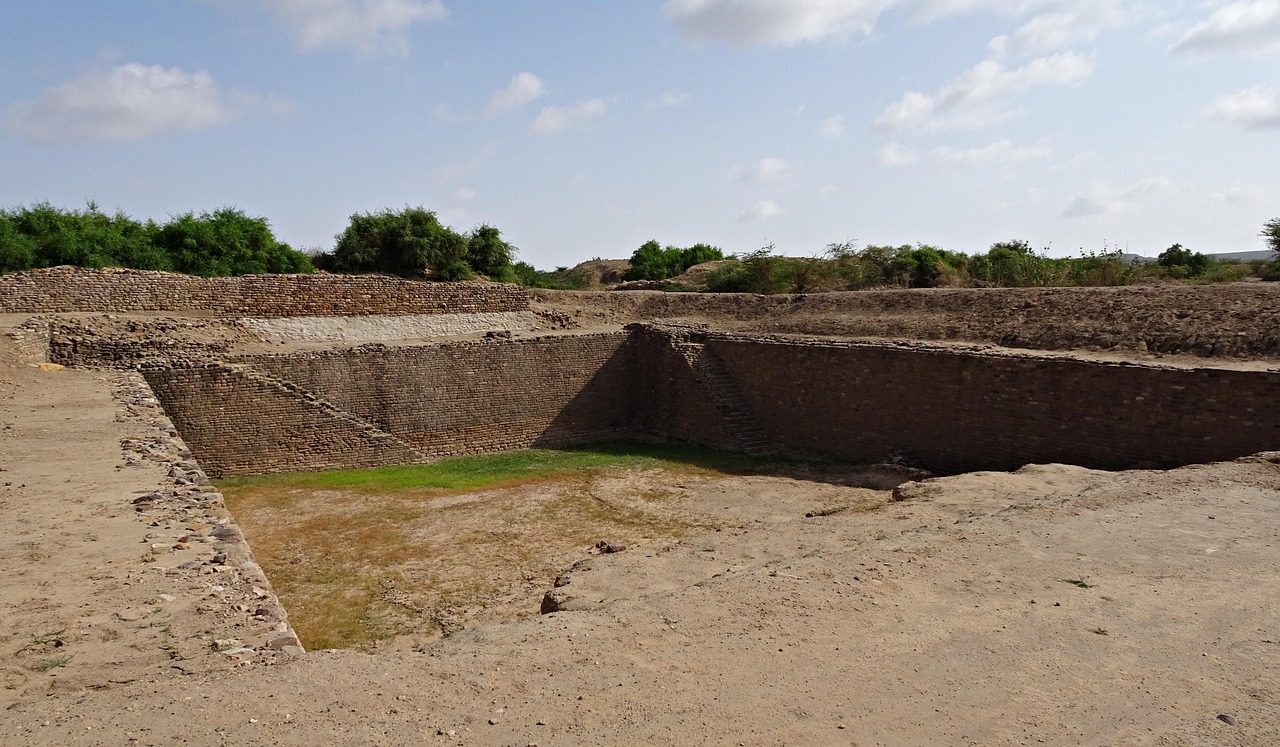
Centered in the fertile floodplains of the Indus River and its tributaries, the civilization spanned a vast region that included modern-day Pakistan, northwest India, and parts of Afghanistan. The natural environment provided abundant resources, fertile soils for agriculture, and strategic waterways that facilitated trade and communication. Notably, urban centers like Mohenjo-Daro and Harappa exemplify advanced city planning, with grid layouts, sophisticated drainage, and reservoir systems, indicating highly organized governance and community cooperation.
Society & Culture
The societal structure of the Harappan culture remains partially understood due to limited decipherment of their script. However, archaeological finds suggest a complex society with social stratification, craft specialization, and religious practices. Artifacts such as seals, figurines, and pottery reveal a rich cultural tapestry intertwined with spiritual symbolism, possibly including fertility rites and urban shrines. The pervasive use of standardized seals indicates a centralized administrative system, possibly with well-regulated trade and resource management.
Economy & Trade
The economy was primarily agrarian, supported by the cultivation of wheat, barley, and cotton. The civilization engaged in extensive trade, evidenced by the discovery of goods like lapis lazuli, semiprecious stones, and shell ornaments, originating from distant regions such as Afghanistan and the Persian Gulf. Maritime trade played a vital role, with evidence of ports and dockyards along the coastline. Trade also extended into Persia and Mesopotamia, suggesting diplomatic and economic links that contributed to the civilization’s prosperity.
Military & Technology
While less is known about the military aspect of the Indus Valley Civilization, archaeological artifacts hint at the use of copper and bronze tools, weapons, and perhaps early forms of armor. Their technological innovations include advanced metallurgy, bead-making, and craft specialization. Fortification remains are scarce, hinting that internal security may have been maintained through societal cohesion rather than militaristic dominance. The civilization demonstrated impressive engineering skills, especially in urban planning and water management, which underscored its technological prowess.
Governance & Law
Direct evidence of political structures remains elusive due to the lack of deciphered written records. However, the standardized weights, measures, and urban layout imply a highly organized and possibly centralized authority capable of maintaining social order and economic regulation. Some scholars suggest a theocratic or bureaucratic ruling class overseeing religious and civic institutions, although the specifics are still a matter of debate.
Archaeology & Sources
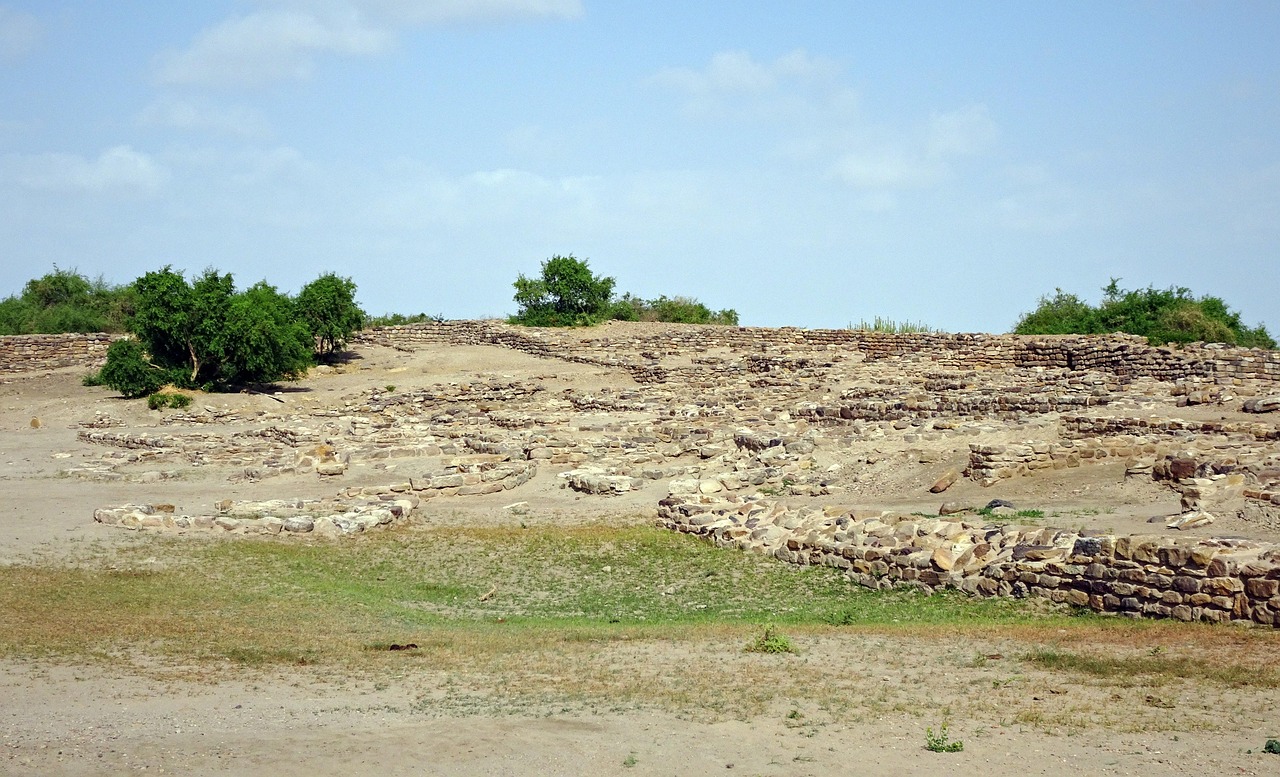
The primary sources for understanding the Indus Valley Civilization come from excavations of sites like Mohenjo-Daro, Harappa, Dholavira, and Lothal. Archaeological evidence includes architecture, pottery, seals, jewelry, and burial sites. The decipherment of ancient scripts remains incomplete, limiting understanding of their language and direct historical records. Secondary sources include ancient texts from neighboring civilizations, such as Mesopotamian records, which reference a region called Meluhha, believed to be linked to the Indus. These sources, combined with modern archaeological techniques like satellite imaging and isotopic analysis, continue to deepen our understanding and reshape theories about their decline.
Timeline
- c. 3300-2600 BCE: Pre-Harappan cultural developments
- c. 2600-1900 BCE: Mature Harappan period, urban flourishing
- c. 1900 BCE: Abrupt decline and abandonment of major cities
- c. 1500 BCE: Transition to smaller regional communities
- Modern excavations begin: 1920s onward
Debates & Controversies
The disappearance of the Indus Valley Civilization remains shrouded in mystery, sparking heated debates among scholars. Some suggest climate change, such as prolonged droughts, gentry's over-farming, or rising river levels, led to their decline. Others argue social upheavals, deforestation, or invasion by migratory groups played a role. Recent research highlights possible evidence of tectonic activity and seismic events affecting urban infrastructure. Theories also explore internal social collapse, resource depletion, or a gradual decline due to economic shifts. The lack of deciphered texts makes definitive conclusions elusive, fostering ongoing investigations and alternative hypotheses.
Conclusion
The mysterious decline of the Indus Valley Civilization continues to captivate scholars and enthusiasts alike, embodying the intrigue of ancient history and archaeology. Its rise demonstrated sophisticated social organization, technological innovation, and cultural complexity, yet even these remarkable achievements could not withstand the enigmatic forces that led to its sudden disappearance. As new discoveries and methods emerge, our understanding evolves, revealing still-hidden facets of a civilization that profoundly shaped the tapestry of human history, leaving behind a trail of artifacts and mysteries that beckon to be unraveled.