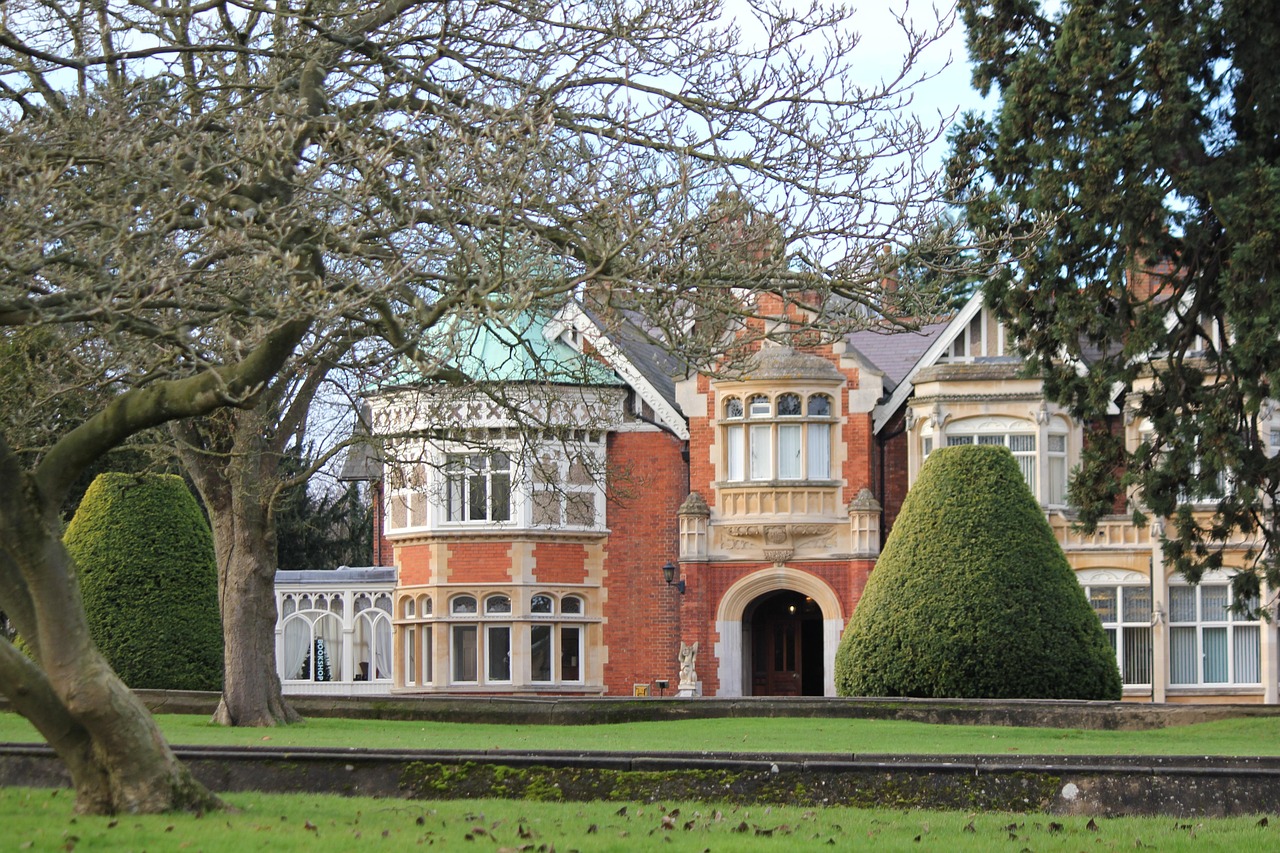
While tanks rolled across Europe and ships clashed in the Atlantic, an equally crucial war was waged in secret—one of mathematics, logic, and ingenuity. Bletchley Park, nestled in Buckinghamshire, became the epicenter of British codebreaking efforts during World War II. This covert operation was instrumental in decrypting enemy communications, notably those encrypted by the infamous Enigma machine.
Background
During the tumultuous years of World War II, the battlefield extended beyond physical confrontation into the realm of information warfare. Control of secret communications, military strategies, and intelligence significantly influenced the outcome of global conflicts. Bletchley Park, located in Buckinghamshire, England, became the epicenter of wartime cryptography—an arsenal of intellectual endeavor dedicated to decoding enemy messages. This clandestine effort, led by a group of talented cryptanalysts, was instrumental in transforming the Allied war effort and altering the course of history.
Geography
Set amidst the serene landscape of Buckinghamshire, Bletchley Park’s remote location was both strategic and symbolic. Its relative seclusion protected sensitive operations from espionage while fostering an environment ripe for innovation. The estate, comprising several large houses and a series of technological laboratories, provided ample space for secret work, including decoding stations, staff accommodations, and innovation hubs. Its geographical placement also facilitated collaboration among diverse specialists, including mathematicians, linguists, and engineers, all working toward a common goal.
Society & Culture
The culture within Bletchley Park was a unique amalgamation of scientific rigor and wartime secrecy. The workforce included academics, chess champions, crossword enthusiasts, and seasoned military officers—each bringing a distinct skill set. Despite the secrecy, a culture of camaraderie, intellectual challenge, and shared purpose flourished. The environment fostered innovation, with cryptanalysts developing pioneering methods in cryptography and machine-assisted decryption, laying foundational stones for modern computing. Gender dynamics were complex; women played crucial roles in operational tasks, often operating machinery and managing communications, challenging contemporary gender stereotypes.
Economy & Trade
While Bletchley's primary mission was intelligence, its activities had significant ripple effects on the wartime economy and beyond. The secret intelligence generated by Bletchley’s work contributed to military victories that preserved economic stability and prevented further destruction. Moreover, the technological innovations developed—most notably early computers like the Colossus—later fueled post-war technological industries. The demand for secure communications and cryptographic technologies also facilitated trade in cybersecurity products in subsequent decades, indirectly shaping the burgeoning digital economy.
Military & Technology
Cryptography and the Enigma
The core challenge at Bletchley was deciphering coded messages, primarily those encrypted by the German Enigma machine. Enigma's complexity stemmed from its rotor mechanisms, which produced nearly unbreakable ciphers—unless the Allied cryptanalysts found a way to exploit their weaknesses. The breakthrough came through a combination of mathematical insight, linguistic analysis, and technological ingenuity, notably with the development of the Bombe machine, designed by Alan Turing and others, to rapidly test possible key settings.

Achievements and Innovations
The development of the Colossus computer marked a watershed moment. It was the world's first programmable digital computer, designed to speed up the process of breaking the Lorenz cipher used by the German High Command. These innovations not only shortened the war but also laid essential groundwork for the modern computer age, transforming cryptography, intelligence analysis, and even broader fields like data processing and artificial intelligence.
Governance & Law
The operations at Bletchley were governed by strict secrecy laws, and personnel were bound by the Official Secrets Act. The government’s orchestration of such clandestine activities involved coordination between military, governmental, and scientific institutions. Post-war, the legal framework for cryptography and intelligence evolved, influenced by the precedents set at Bletchley. The secrecy persisted for decades, impacting public acknowledgment and historical understanding of the work done there.
Archaeology & Sources
Delving into Bletchley’s history involves examining classified documents, personal memoirs, and oral histories. The uncovering of the Ultra secrets after the war, along with declassified archives, has painted a detailed picture of the operations. Museums, dedicated memorials, and academic repositories now preserve artifacts such as the Colossus computer remnants, wartime communication logs, and personal items belonging to the cryptanalysts, providing invaluable insights into this clandestine world.
Timeline
- 1938: British government initiates codebreaking efforts in anticipation of war with Germany.
- 1939: Bletchley Park officially established as the center for cryptanalysis.
- 1940: Development of the Bombe machine to assist in breaking Enigma codes begins.
- 1941: Alan Turing develops the concept of the Turing machine; Colossus computers begin operation.
- 1942: The first successful decryption of the Lorenz cipher using Colossus.
- 1943: Bletchley’s operations expand, intercepting thousands of German messages daily.
- 1945: End of WWII; Bletchley's codebreaking operations conclude.
- Post-1945: Secrecy laws restrict disclosure; work influences the development of computing technologies.
Debates & Controversies
The secretiveness surrounding Bletchley Park has long sparked debates about transparency and recognition. For decades, the full scope of the codebreakers' achievements remained classified, leading to questions about the recognition of their contributions. Recent revelations of the extent of their work have challenged traditional narratives of wartime heroism, emphasizing the ethical dilemmas of secrecy versus recognition. The debates also extend into discussions about intellectual property, post-war secrecy laws, and the controversial aspects of wartime espionage.
Conclusion
In the quiet corridors of Bletchley Park, a revolution in warfare and technology was quietly underway—a revolution driven by the relentless dedication, brilliance, and ingenuity of cryptanalysts. Their work, once shrouded in secrecy and silence, now stands as a testament to the power of human intellect and collaboration in the face of seemingly insurmountable odds. As future generations continue to unlock the secrets of the past, the legacy of Bletchley Park endures, reminding us of the profound impact of cryptography, innovation, and the unyielding pursuit of knowledge in shaping our world.